


Perfectionism, Burnout, and Better Decision-Making With Dr. Greg Chasson
Perfectionism can look like a strength from the outside. It can make you careful, conscientious, hardworking, and committed to doing right by the people who depend on you. Those qualities can serve a business owner, executive, advisor, parent, or family very well.
But when high standards become rigid expectations, perfectionism can quietly turn into delay, frustration, strained relationships, and burnout.
On FiduciWho, I spoke with Dr. Greg Chasson, a psychologist, international keynote speaker, associate professor at the University of Chicago, and board-certified cognitive behavioral therapist. His work focuses on perfectionism, procrastination, burnout, fear of failure, and the patterns that can keep high achievers from moving forward.
This conversation matters because thoughtful decisions rarely arrive with perfect certainty. Whether you are leading a company, planning for retirement, managing family responsibilities, or evaluating an important financial choice, the goal is not to remove every unknown. The goal is to understand what matters, prepare responsibly, and act with intention.
Quick Answers
What is perfectionism? Perfectionism is more than wanting to do good work. It becomes problematic when expectations exceed what a situation requires and a person cannot adapt when reality changes.
How are perfectionism and burnout connected? Perfectionism can contribute to burnout through excessive checking, unrealistic standards, inflexibility, delayed decisions, and a loss of alignment between daily responsibilities and personal values.
What is process paralysis? Process paralysis occurs when planning, checking, revising, and seeking certainty become substitutes for making a thoughtful decision and moving forward.
How can perfectionism affect leadership? Leaders who impose rigid standards on others can create fear, resentment, and reduced initiative because team members begin to believe that nothing will ever be good enough.
What helps high achievers make better decisions? Clarifying values, assigning the right amount of effort to each responsibility, accepting reasonable uncertainty, and taking the next appropriate step can support better decision-making.
Perfectionism Can Be a Strength—Until It Becomes Rigid
One of the first points Greg made was that perfectionism is not automatically bad. People with perfectionistic tendencies often care deeply about their work. They notice details. They follow through. They want to produce something meaningful and avoid letting other people down.
The trouble begins when those strengths are combined with expectations that go beyond what the situation requires and an unwillingness to change course when the facts change.
Healthy excellence is flexible. It asks, “What result matters here, and what level of effort will help us achieve it?” Harmful perfectionism is rigid. It insists that there is only one acceptable result, one correct process, or one standard that must be met regardless of the cost.
That distinction matters in financial planning as well. A thoughtful plan should be detailed enough to support good decisions, but flexible enough to respond to changing markets, family circumstances, business conditions, and personal goals. Good planning is not about guessing the future perfectly. It is about preparing for it.
For a related perspective on staying effective when pressure rises, explore Tina Greenbaum’s approach to pressure-proofing your potential.
When Perfectionism Turns Into Process Paralysis
In my world, I see people get stuck because they want every projection, every answer, and every possible outcome before they act. They want certainty before movement. Life rarely offers certainty on demand.
Greg describes this as process paralysis. It happens when planning, checking, rechecking, and revising no longer improve the decision. Instead, they prevent the decision from being made.
For entrepreneurs and executives, the cost can be substantial. Opportunities pass. Problems linger. Conversations are postponed. Team members wait for direction. The leader may feel busy and responsible while the organization remains stuck.
The same pattern can affect financial and retirement decisions. Careful analysis is valuable, and personal decisions involving wealth, taxes, insurance, investments, or legal matters should be reviewed with qualified professionals. But perfect information is almost never available. At some point, you need enough clarity to make a thoughtful decision and enough courage to take the next appropriate step.
The FiduciWho Short about why sometimes the details do not materially change the decision offers a useful reminder: more information is not always the same as more clarity.
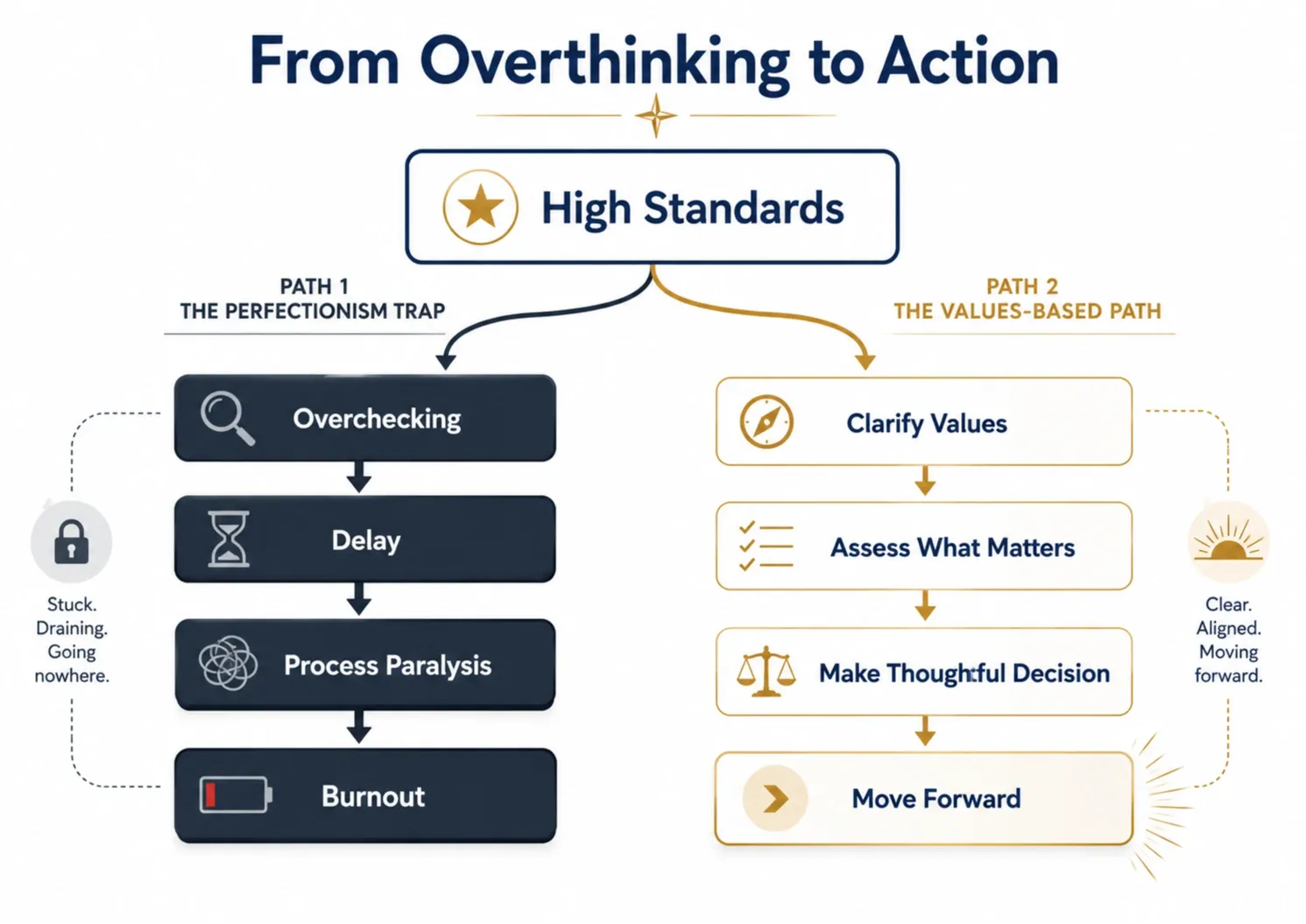
How Perfectionism Affects Leadership and Teams
Perfectionism does not affect only the person experiencing it. It changes the environment around that person.
Greg described self-oriented perfectionism as the unrealistic standards people place on themselves. Other-oriented perfectionism occurs when someone projects those standards onto employees, colleagues, business partners, or family members.
That second form can become particularly damaging in leadership. When a leader becomes rigid, rule-driven, and overly focused on what is right or wrong, team members may begin to feel that nothing they produce will ever meet the standard. Initiative declines. Creativity narrows. People wait for approval instead of exercising judgment.
Strong leadership does not mean accepting poor work. It means connecting standards to principles and outcomes. Rules tell people what to do. Principles help them understand why it matters and how to respond when circumstances change.
A leader also needs people who can identify blind spots and challenge assumptions. The FiduciWho Short about why a fresh perspective can improve important decisions reinforces the value of building a team that does not simply mirror the leader’s thinking.
For business owners who recognize the cost of carrying too much control personally, Jason Duncan’s discussion of hero syndrome and business freedom explores a related leadership challenge.
From Striving to Thriving: The A-B-C Framework
One of the most practical parts of my conversation with Greg was his framework for moving from striving to thriving. The process begins with values.
Not what you think should matter. Not what your profession rewards. Not what another person expects you to prioritize. The question is what genuinely matters to you and the life you are trying to build.
Once those values are clear, responsibilities can be divided into three levels of emphasis.
Emphasis A: Give It Your Best
These are the responsibilities, relationships, and decisions that align closely with your values and carry meaningful consequences. They deserve your highest level of attention and care.
Emphasis B: Complete It Well Enough
These responsibilities still matter, but they do not require endless revision. “Good enough” does not mean careless. It means the work meets the real need without consuming resources that belong elsewhere.
Emphasis C: Do Not Do It
Some responsibilities are outdated, unnecessary, or disconnected from what matters most. They may need to be delegated, postponed, or eliminated.
The perfectionist’s mistake is treating everything as Emphasis A. That is not excellence. It is an unsustainable allocation of time, attention, and emotional energy.
This is one reason the reminder that purpose requires balance matters. A meaningful life is not built by giving maximum effort to every possible responsibility. It is built by knowing where your best effort belongs.
Why Discomfort Is Part of Better Decision-Making
Perfectionism often creates what Greg calls safety behaviors. These are habits that reduce anxiety in the short term but preserve the underlying fear.
Examples include excessive checking, asking repeatedly for reassurance, procrastinating, revising work long after it meets the need, or postponing a decision until everything feels exactly right.
The immediate relief makes those behaviors feel useful. Over time, however, they teach the person that uncertainty must be avoided rather than managed.
Progress requires practicing action before everything feels perfect. Submit the work. Have the conversation. Delegate the responsibility. Make the thoughtful decision based on the information available.
That does not mean being reckless. It means recognizing that discomfort is not automatically danger. The FiduciWho Short A Little Fear Isn’t Bad offers a helpful companion idea: fear may tell us to pay attention, but it does not always mean we should stop.
When anxiety, perfectionism, or burnout creates significant distress or interferes with daily life, guidance from a qualified mental health professional may be appropriate.
Burnout Is Usually an Alignment Problem, Not Just a Rest Problem
Rest matters. A vacation can provide breathing room and temporary relief. But Greg cautioned against treating time off as a complete solution to burnout.
If someone returns to the same rigid expectations, unhealthy patterns, lack of control, and disconnect between daily work and personal values, the exhaustion often returns. In some cases, the person comes back to a larger backlog and feels even more overwhelmed.
Burnout is frequently connected to a loss of meaning, control, and alignment. It can grow when people spend too much energy trying to control outcomes they cannot fully control or when their work no longer reflects what matters to them.
Sustainable improvement may require more than rest. It may require changing expectations, responsibilities, boundaries, leadership practices, or the way success is being defined.
This emotional dimension also matters in financial planning. A person can appear financially prepared while still feeling anxious, uncertain, or emotionally unready for a major transition. Dennis Harhalakis’s discussion of the emotional side of money explores why financial decisions are rarely only about numbers.
What This Means for Business Owners, Families, and Financial Planning
The goal is not to stop caring. It is not to lower every standard or make careless decisions. The goal is to become more intentional about where excellence is valuable and where perfectionism is getting in the way.
For business owners, that may mean trusting capable people, defining principles clearly, and allowing team members to exercise judgment. For families, it may mean having an important conversation before every detail is settled. For people preparing for retirement, it may mean accepting that financial projections can inform a decision without removing every emotional uncertainty.
Financial planning works best when it supports the life you actually want to live. A sound plan helps you prepare for a range of possibilities, understand tradeoffs, and make decisions that remain connected to your values.
That is why Jesse Cramer’s message that smart planning matters more than trying to prove how smart an investment decision was fits this conversation so well.
At Raskin Global, we talk about helping people protect, grow, enjoy, and transfer their wealth. But enjoying life requires more than reaching a number. It requires clarity, confidence, purpose, and the ability to move without waiting for every part of the future to become perfectly certain.
A useful question to consider is this: Are you waiting for information that could materially change the decision, or are you waiting because taking the next step feels uncomfortable? A fiduciary-minded financial professional can help you evaluate the financial facts and tradeoffs, while qualified legal, tax, insurance, investment, and mental health professionals can provide guidance within their areas of expertise.
Final Thoughts
Dr. Greg Chasson’s message is not that high standards are bad. It is that high standards need flexibility, purpose, and proportion.
Some responsibilities deserve your absolute best. Some simply need to be completed competently. Others may not need your attention at all. Knowing the difference can protect your time, strengthen your leadership, reduce unnecessary stress, and help you make better decisions.
Your dreams matter, and your future is our priority. Financial planning is not just about numbers. It is about people, purpose, and peace of mind. When your financial strategy reflects the life you truly value, you are better prepared to protect, grow, enjoy, and transfer your wealth without allowing fear or perfectionism to run the show.
If perfectionism has delayed an important financial, business, retirement, or family conversation, consider beginning with one thoughtful discussion. You do not need every answer before you can start preparing responsibly for what comes next.
Frequently Asked Questions
Is perfectionism always harmful?
No. Perfectionistic tendencies can support careful work, strong follow-through, and high standards. They become harmful when expectations exceed what the situation requires and the person cannot adapt when circumstances change.
What is process paralysis?
Process paralysis occurs when excessive planning, checking, revising, or reassurance seeking prevents a person from making a thoughtful decision or taking the next appropriate step.
How does perfectionism contribute to burnout?
Perfectionism can contribute to burnout through unrealistic expectations, repeated checking, limited flexibility, delayed decisions, and a growing disconnect between daily responsibilities and personal values.
How can leaders maintain high standards without creating fear?
Leaders can connect standards to clear principles, explain why the work matters, allow appropriate judgment, and distinguish between responsibilities that require excellence and those that require competent completion.
What are Emphasis A, B, and C?
Emphasis A means giving an important responsibility your best effort. Emphasis B means completing it well enough without unnecessary refinement. Emphasis C means deciding that the task should be delegated, postponed, eliminated, or not done.
How does values-based decision-making relate to financial planning?
Values-based decision-making helps connect financial choices to the life a person wants to support. It can clarify priorities, guide tradeoffs, and keep planning focused on family, purpose, security, and long-term goals.