


Some of the most important lessons in leadership do not come from a management book or a five-year strategic plan. They come from experience, mistakes, difficult transitions, and the realization that leading people requires more than having the right answer.
That was one of the themes that stayed with me after my FiduciWho conversation with Warren Quinn, CEO of Humans at Work. Warren’s career has taken him through landscape construction, law, nonprofit leadership, and executive coaching, and his perspective reinforced something I have seen during decades of working with business owners: the strongest organizations are not built on strategy alone. They are built on people who understand why the work matters.
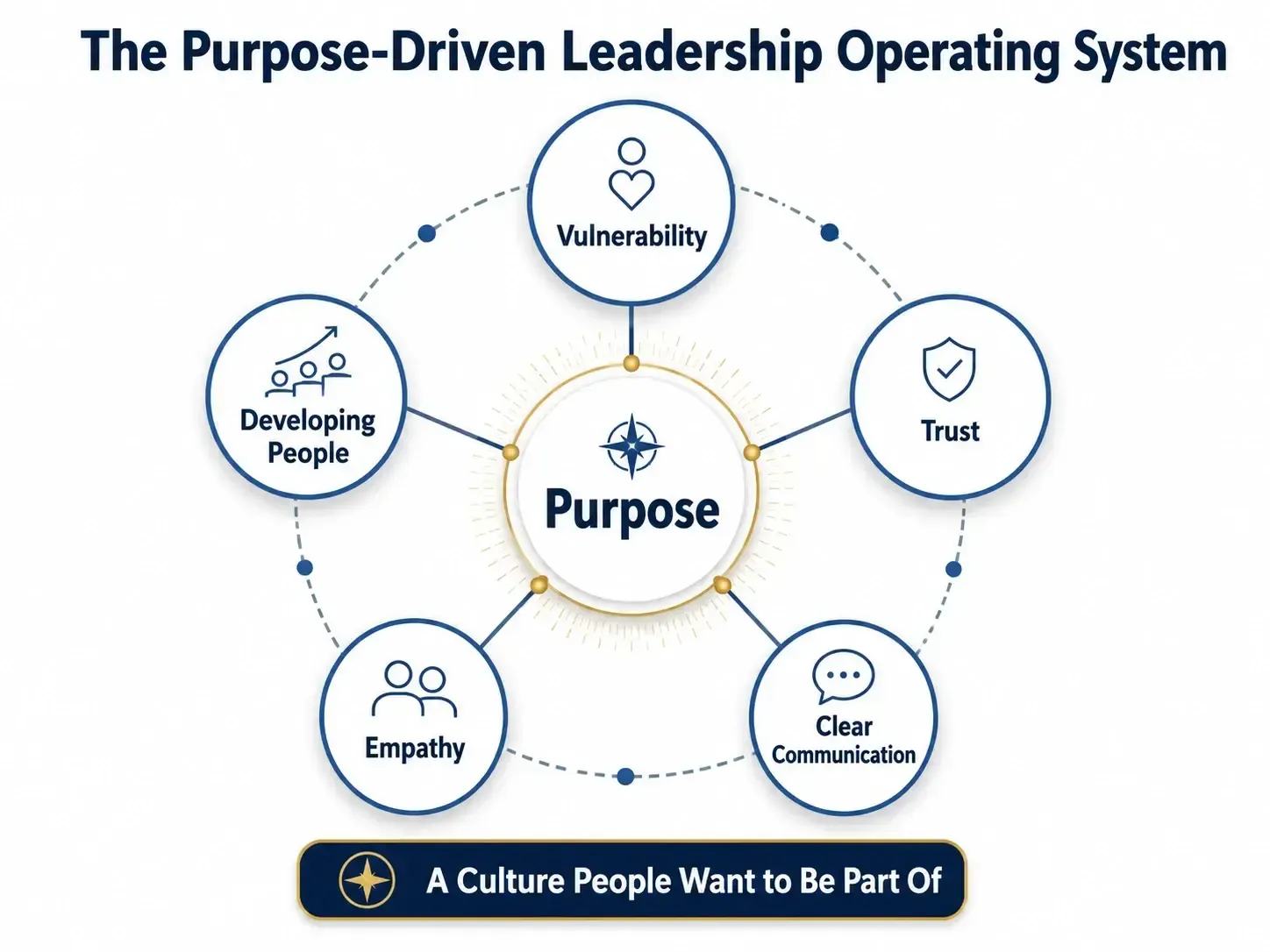
Purpose-driven leadership is not about becoming softer or lowering expectations. It is about creating clarity around what matters, building trust with the people around you, and understanding that a company’s culture will influence how every strategy is actually carried out.
And for business owners, this conversation reaches beyond leadership. Eventually, every owner has to confront a deeper question: who are you when you are no longer the person running the company?
Quick Answers
What is purpose-driven leadership? Purpose-driven leadership means connecting the way you lead, communicate, and make decisions to a larger sense of meaning instead of relying only on authority, process, or financial results.
Why does company culture matter? Company culture shapes how people communicate, solve problems, respond to pressure, and work together. A strong strategy can struggle when the behaviors inside the organization work against it.
Does a strong leader need to have all the answers? No. Warren’s perspective is that effective leaders are willing to be vulnerable, ask for help, listen, and work with their teams rather than positioning themselves above them.
Why is letting go difficult for business owners? A business can become deeply connected to an owner’s identity, purpose, relationships, and daily routine. Leaving can therefore be an emotional transition as well as a financial one.
What is selfless leadership? Selfless leadership means asking what the people around you need in order to grow and succeed while still maintaining healthy boundaries and responsibility for your own needs.
Purpose-Driven Leadership Does Not Require Having All the Answers
There is an old version of leadership that says the person at the top should always look certain. Never admit weakness. Never ask for help. Put on the armor, make the decision, and keep moving.
Warren challenged that idea. His view is that leadership is about being with your people rather than positioning yourself above them.
That does not mean abandoning authority or refusing to make difficult decisions. It means recognizing that vulnerability and competence can exist at the same time. A leader can say, “I do not know yet,” ask a better question, invite another perspective, and still provide direction.
In many cases, that honesty builds more trust than pretending certainty exists when everyone in the room knows it does not.
The FiduciWho Short on why leaders need to build up the people around them reinforces this same idea. Leadership is not measured only by what the person at the top can accomplish. It is also reflected in what the people around that leader become capable of doing.
Company Culture Is the Operating System Behind the Strategy
You can build an impressive strategic plan. You can create projections, scorecards, goals, and performance metrics. But if the culture underneath those tools is broken, the plan may never work the way it looked on paper.
Warren described culture as the operating system of an organization. I like that analogy because an operating system determines how everything else functions. Culture influences how people speak to one another, how disagreement is handled, whether employees feel safe raising concerns, and whether leadership behavior matches the values written on the wall.
Warren referenced behaviors such as “listen generously” and “speak straight.” Those may sound simple, but they become meaningful only when they are consistently practiced.
Every company has its own history, personalities, challenges, and rhythms. A book can provide ideas, but it cannot know your people as well as you should. Leadership therefore requires translating principles into behaviors that actually fit the organization.
For a closely related conversation, Warren Quinn’s FiduciWho discussion about the universal why behind thriving workplaces explores how purpose and workplace behavior come together.
Why Meaning at Work Matters More Than Leaders Realize
One of Warren’s central ideas is what he calls the “universal why”: people want to know that what they do matters.
That does not mean every task will be exciting. Every company has routine work, difficult days, deadlines, and responsibilities people would rather avoid. Purpose does not eliminate those realities. It gives them context.
When people understand how their work contributes to something meaningful, the job becomes more than a list of assignments. Leadership becomes less about controlling activity and more about helping people see how their contribution fits into the larger picture.
Warren also made an important distinction about empathy. Treating people the way you would want to be treated is not always enough. Different people value different forms of communication, recognition, responsibility, and support. Purpose-driven leadership requires learning what matters to the person in front of you.
That principle translates directly into financial planning. The right financial plan is not the one an advisor personally prefers. It is the one built around the goals, values, concerns, and life of the person being served.
The FiduciWho Short Stop Thinking About Yourself captures the same leadership challenge: better service often begins when we stop making the relationship primarily about our own preferences.
Work-Life Balance May Be the Wrong Goal for Business Owners
Warren and I also challenged the traditional idea of work-life balance. For many entrepreneurs, there is no clean line separating business from life. The company may be part of the owner’s identity, friendships, purpose, family story, and sense of accomplishment.
That is why the better question may be whether your whole life has the right kind of balance.
If the business is meaningful and you enjoy building it, work itself can be a source of energy and fulfillment. The problem begins when an owner spends decades enduring the company while telling themselves that real life will start after retirement or after a sale.
I believe we need to enjoy some of what we have built today. At Raskin Global, that idea sits directly inside our Protect, Grow, Enjoy, Transfer framework. Building wealth matters, but so does using your time and resources in ways that make life meaningful now.
The Short on why purpose needs balance provides a useful companion to this point. Financial success and business success mean very little if the process leaves no room for the life those achievements were supposed to support.
Letting Go of a Business Is Both a Financial and Emotional Transition
Every business owner eventually leaves the company. The circumstances differ, but ownership does not last forever.
That reality can be difficult to confront because a business is rarely just a financial asset. It may represent decades of work, reputation, relationships, personal identity, family sacrifice, and daily purpose.
When an owner sells or steps away, the financial transaction may be enormous, but the emotional transition can be even more complicated. Who are you when people no longer call you the boss? What does Monday morning look like? Where does your sense of contribution come from?
Warren emphasized the importance of preparing for that side of the transition. He referenced Viktor Frankl’s Man’s Search for Meaning as a reminder that personal worth is deeper than a title or balance sheet.
I see a clear parallel in financial planning. We can help an owner understand cash flow, assets, taxes, retirement resources, risk, and how a transaction may affect the broader financial picture. But financial readiness does not automatically create emotional readiness.
For owners approaching that stage, Jason Duncan’s conversation about escaping hero syndrome and creating business freedom provides another useful perspective on what happens when the company depends too heavily on the owner.
The FiduciWho Short on how to plan your exit also reinforces why waiting until the transaction is imminent may leave important financial and personal questions unresolved.
Selfless Leadership Is Not the Same as Self-Sacrifice
One of the strongest ideas from the conversation was simple: stop asking only, “What is in this for me?” and start asking, “What do the people around me need from me?”
That is selfless leadership.
It does not mean ignoring your own health, finances, family, or boundaries. A leader who destroys themselves in the name of service is not building something sustainable. Selfless leadership means aligning your own goals with the growth and fulfillment of the people you are responsible for leading.
Sometimes that means teaching rather than doing. Sometimes it means listening instead of giving an immediate answer. Sometimes it means allowing a capable employee to make a decision differently than you would have made it.
That last part can be especially difficult for founders. The business exists because they cared deeply about how things were done. Eventually, however, the same control that helped create the company can limit its ability to grow beyond them.
Purpose, Wealth, and Legacy Are More Connected Than They Look
There is a reason this leadership conversation belongs on FiduciWho. Leadership, wealth, and legacy are not separate subjects.
A business may be one of the largest financial assets an owner ever creates. But the real legacy is rarely limited to the sale price. It also includes the people developed along the way, the family affected by the journey, the culture left behind, and the values that continue after the owner is gone.
That is how I think about Protect, Grow, Enjoy, and Transfer.
- Protect: Protect the people, relationships, financial foundation, and business value that matter.
- Grow: Build with discipline rather than allowing growth to become the only measure of success.
- Enjoy: Create room for meaning, relationships, contribution, and fulfillment before someday arrives.
- Transfer: Think beyond transferring dollars. Consider the wisdom, values, opportunity, and responsibility you want to leave behind.
Purpose-driven leadership helps connect all four because it asks a question that financial statements alone cannot answer: what is everything you are building ultimately for?
Final Thoughts
My conversation with Warren Quinn reinforced that leadership is not about becoming the person with every answer. It is about becoming the person willing to listen, communicate clearly, ask for help, develop others, and connect the work to something meaningful.
Company culture is not a side project. It is the environment in which every strategy succeeds or fails. And for business owners, the ability to build a company that can eventually function without them is part of both leadership and long-term planning.
Your dreams matter, and your future is our priority. Protecting, growing, enjoying, and transferring wealth becomes more meaningful when those decisions are connected to purpose rather than numbers alone.
If you own a business, consider asking two questions: what does your organization need from you as a leader today, and who do you want to be when you are no longer running it? Qualified business, financial, legal, tax, and leadership professionals can help you explore the practical implications of those answers within your own circumstances.
Frequently Asked Questions
What is purpose-driven leadership?
Purpose-driven leadership connects the way a leader communicates, makes decisions, develops people, and sets priorities to a larger sense of meaning rather than focusing only on authority or financial results.
How does company culture affect business strategy?
Company culture influences how people communicate, cooperate, respond to pressure, and carry out decisions. Even a strong strategy can struggle when everyday behaviors inside the organization work against it.
Why is vulnerability important in leadership?
Appropriate vulnerability allows a leader to acknowledge uncertainty, ask for help, listen to other perspectives, and build more honest relationships without giving up responsibility for making decisions.
Why can leaving a business be emotionally difficult?
Business ownership can become closely connected to identity, purpose, relationships, routine, and personal achievement. Stepping away therefore may require emotional preparation in addition to financial planning.
What is selfless leadership?
Selfless leadership means considering what other people need in order to grow and contribute while still maintaining appropriate personal boundaries, responsibilities, and well-being.
How does purpose-driven leadership relate to financial planning?
Both begin with understanding what matters most. Financial planning can help align money, business decisions, retirement, risk, and legacy with the life and purpose a person ultimately wants those resources to support.